1.Research Background
Two‑dimensional transition‑metal dichalcogenides (TMDCs) feature tunable band gaps, outstanding photoelectric response and robust mechanical stability, which makes them promising candidate materials for constructing low‑power‑consumption, highly‑integrated flexible electronic and optoelectronic devices. Their compelling performance largely originates from the reversible phase transition between the 1H semiconducting phase and the 1T′ metallic phase. For a long time, this phase transition has been regarded as a typical martensitic transformation, in which structural reorganization scale proceeds via cooperative shear motion at the atomic scale. Nevertheless, the high energy barrier of the phase transition, as predicted by conventional theories, appears to be at odds with experimental evidence that suggests the transition occurs with ease. The kinetics and microscopic mechanism underlying the transition have thus remained an enduring enigma, which severely restricts the precise modulation of the structure and properties of such materials.
2.Research Highlights
Recently, Prof. Haiyang Niu’s research team, in collaboration with the group led by Researchers Yan Sun and Xing‑Qiu Chen from the Institute of Metal Research, Chinese Academy of Sciences, investigated the phase transition behavior of monolayer MoTe2, a representative two‑dimensional TMDC. The research employed molecular dynamics simulations driven by machine-learning potential combined with enhanced sampling techniques to systematically elucidate the microscopic mechanism of the MoTe2 1H‑to‑1T′ phase transition.
Atomic-scale simulations confirm that the phase transition in monolayer MoTe₂ does not follow the conventional cooperative‑shear pathway of the martensite. Instead, it proceeds via a newly identified mechanism of one‑dimensional domino‑like atomic hopping: Te atoms sequentially hop along specific crystallographic directions and trigger a chained structural transformation accompanied by Peierls distortion of the crystal lattice with local topological rearrangement. Theoretical calculations demonstrate that this domino‑like transition pathway has a low energy barrier, which provides vital evidence to resolve the long‑standing discrepancy between theoretical predictions and experimental measurements.
Furthermore, from the standpoint of microscopic kinetics, the research revealed the intrinsic origins of single‑domain and multi‑domain polymorphism formed in the 1H‑1T′ phase transition of monolayer MoTe2. Accordingly, modulation strategies were proposed to realize reversible and controllable switching between single‑domain and multi‑domain configurations. By these strategies, the second order nonlinear optical response of monolayer MoTe2 can be substantially enhanced. The shift current response intensity in the visible spectrum increases from ~70 μA/V⟡ to ~470 μA/V⟡, demonstrating remarkable application advantages compared with conventional semiconductor materials.
This work, entitled 1D domino‑like phase transformation enables material programming in 2D MoTe2, has been published in Proceedings of the National Academy of Sciences of the United States of America (PNAS). The research was jointly completed by the Institute of Metal Research (Chinese Academy of Sciences) and Northwestern Polytechnical University. Doctoral candidates Xiangyang Liu (Institute of Metal Research, CAS) and Mingyi Chen (Northwestern Polytechnical University) are co‑first authors. Researcher Yan Sun (Institute of Metal Research, CAS) and Prof. Haiyang Niu (Northwestern Polytechnical University) are co‑corresponding authors.
This research received financial support from the National Natural Science Foundation of China, research grants of the National Key Laboratory of Solidification Technology, and the “0‑to‑1” Original and Leading Special Program of the Fundamental Research Funds for the Central Universities.
3.Figure Captions
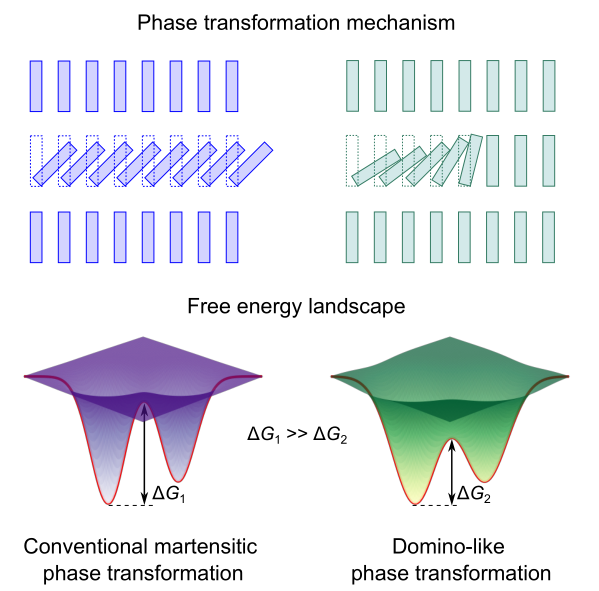
Figure 1. Schematic comparison between conventional martensitic phase transformation and domino‑like phase transformation.
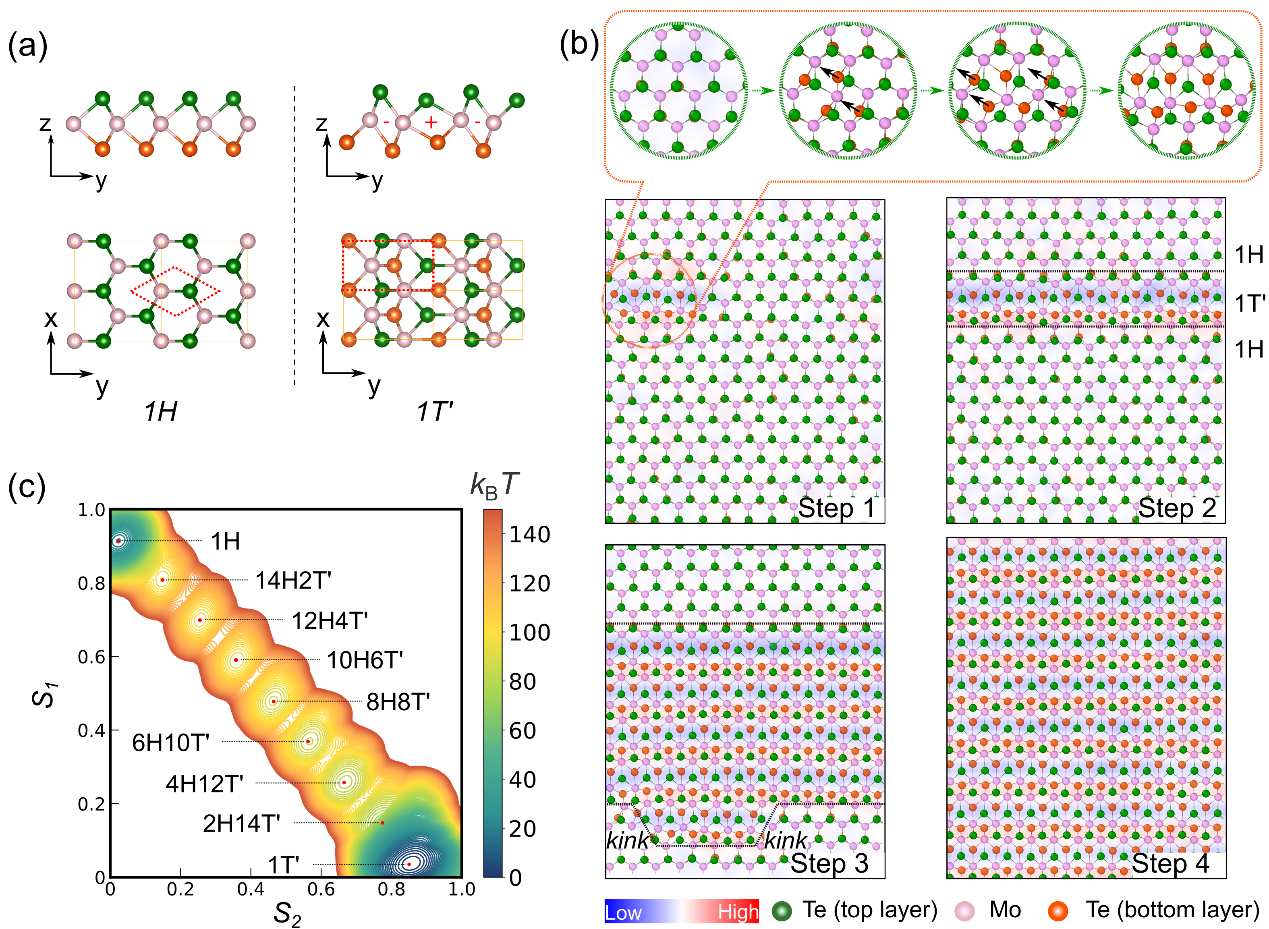
Figure 2. Microscopic mechanism of single‑domain 1H‑1T′ phase transition in monolayer MoTe₂.
Figure 3. Microscopic formation mechanism of multi‑domain 1T′ in monolayer MoTe₂.
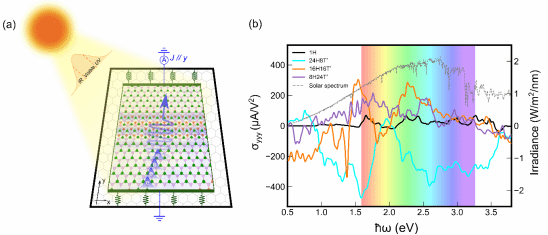
Figure 4. Design of second‑order nonlinear materials with strong responses based on the revealed phase‑transition mechanism.
4.Summary
Using machine‑learning‑potential‑driven molecular‑dynamics simulations and enhanced‑sampling approaches, this study systematically decodes the microscopic mechanism governing the 1H‑1T′ phase transition in monolayer MoTe₂ and reveals the one‑dimensional domino‑style atomic‑hopping pathway during phase transformation. Building on the mechanistic understanding obtained herein, the team developed modulation strategies for customizing material structures and optoelectronic properties at the micro‑nanoscale. These findings offer new insights for the development of programmable electronic devices, high‑efficiency photovoltaic materials and high‑speed electronic‑switch technologies.