Cite this article:
Liu, M.; Bai, R.; Cheng, Z.; Sun, J.; Chen, S.; Cheng, S.; Cheng, X.; Yuan, M.*; Zhang, J*. Balancing Dimerization and Hydrogenation Kinetics by Stabilizing Cu⁺ and Tightening H-Bond Network for Electrocatalytic Acetylene Hydrodimerization. Angew. Chem. Int. Ed. 2026.
https://doi.org/10.1002/anie.4304657
1.Introduction
1,3-Butadiene is the key monomer for the manufacture of synthetic rubbers (e.g., styrene-butadiene rubber and polybutadiene) and engineering plastics (e.g., acrylonitrile-butadiene-styrene resin). In 2023, the global demand for 1,3-butadiene exceeded 12 million metric tons, with an annual growth rate above 5%. Traditionally, 1,3-butadiene is produced as a by-product of the C4 fraction from naphtha steam cracking during ethylene/propylene production. However, the ever-growing implementation of ethane dehydrogenation technology for ethylene production from shale gas has reduced the production capacity of traditional naphtha cracking and exacerbated the shortage in 1,3-butadiene supply. Although alternative routes such as ethanol dehydrogenation-condensation and oxidative dehydrogenation of butane can also produce 1,3-butadiene, these routes typically operate under high temperatures and pressures, resulting in enormous energy consumption and CO2 emissions. Recently, the electrocatalytic hydrodimerization of acetylene (EHDA) powered by renewable electricity has emerged as a highly promising green synthetic route. Nevertheless, this reaction faces a formidable challenge: the excessive active hydrogen species at conventional interfaces drive the preferential semihydrogenation of acetylene to ethylene, and the Cu+ species serving as the key sites for C-C coupling are highly susceptible to deactivation under electrochemical reduction conditions, leading to the rapid degradation of both catalytic activity and selectivity.
2.Summary of Research Findings
Professor Jian Zhang’s group innovatively modified Cu2O catalysts via surface grafting of citrate anion for balancing the kinetics between C-C coupling and hydrogenation in electrocatalytic acetylene hydrodimerization. The X-ray absorption fine structure, Cu LMM Auger spectrum, and theoretical simulations corroborate citrate anion modification induces electron transfer from Cu2O to citrate ions, which stabilizes the active Cu+ sites under strong electrochemical reduction conditions and further lowers the C-C coupling barrier of *C2H2 and *C2H3 to *C4H5. In situ attenuated total reflection surface-enhanced infrared spectroscopy confirms that the citrate anion also reconstructs the hydrogen-bonding network and reduces the content of isolated water at the electrode-electrolyte interface. Consequently, the appropriate supply of active *H species selectively promotes the hydrogenation of *C4H5 to 1,3-butadiene while suppressing the competitive acetylene semihydrogenation. Benefiting from these advantages, the E-CA/Cu2O catalyst achieves a Faradaic efficiency of 88.0% and a 1,3-butadiene partial current density of 55 mA cm−2, which is about 3-fold higher than E-Cu2O. Moreover, it can operate continuously and stably for 21 h in a two-electrode system.
The research, titled “Balancing Dimerization and Hydrogenation Kinetics by Stabilizing Cu⁺ and Tightening H-Bond Network for Electrocatalytic Acetylene Hydrodimerization” has been published in the top international chemistry journal Angewandte Chemie International Edition (DOI: 10.1002/anie.4304657). The corresponding authors are Professor Jian Zhang and Associate Professor Menglei Yuan from State Key Laboratory of Solidification Processing and School of Materials Science and Engineering, and the first author is Ph.D candidate Mingxuan Liu.
3.Graphical Overview
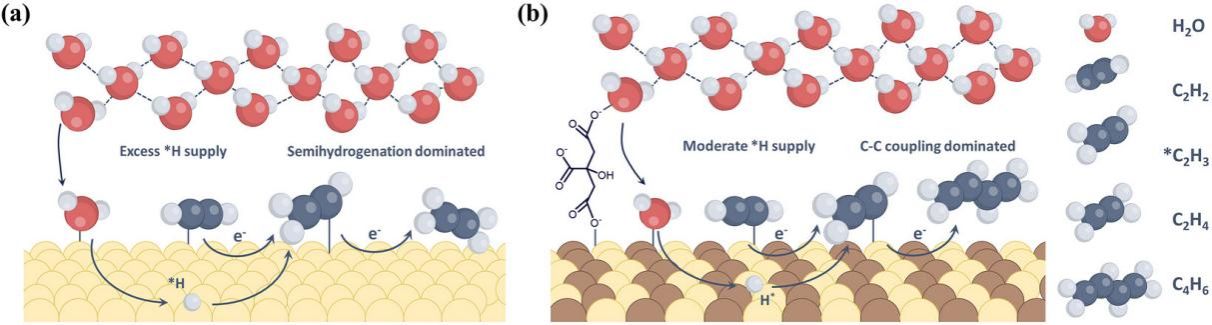
Figure 1. Schematic illustration of the electrocatalytic acetylene reaction pathways over conventional Cu-based catalysts and citrate anion-modified Cu2O catalysts.
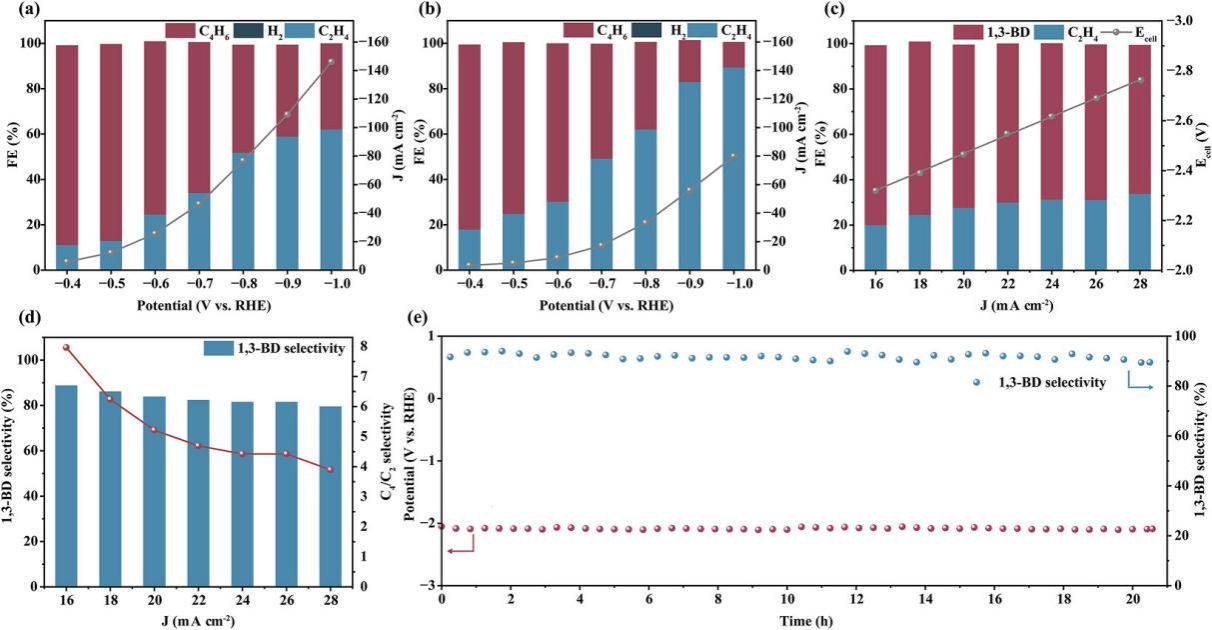
Figure 2. Electrocatalytic performance test of E-CA/Cu2O electrocatalysts for electrocatalytic hydrodimerization of acetylene.
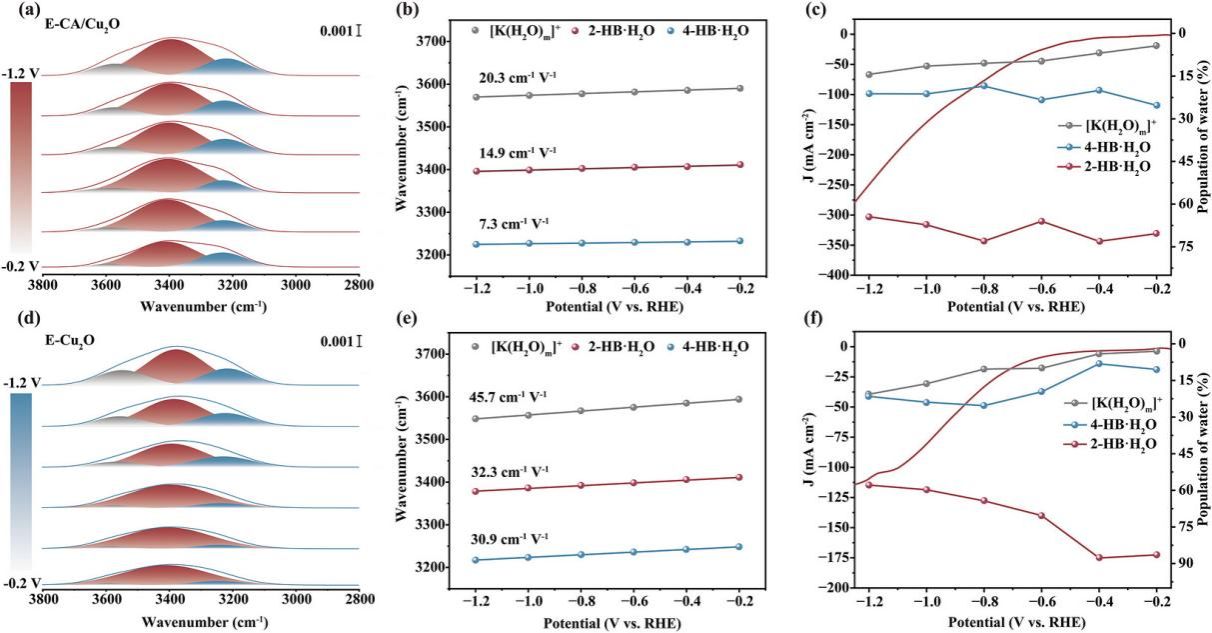
Figure 3. In situ ATR-SEIRAS spectra of interfacial water on E-CA/Cu2O.